











Introduction
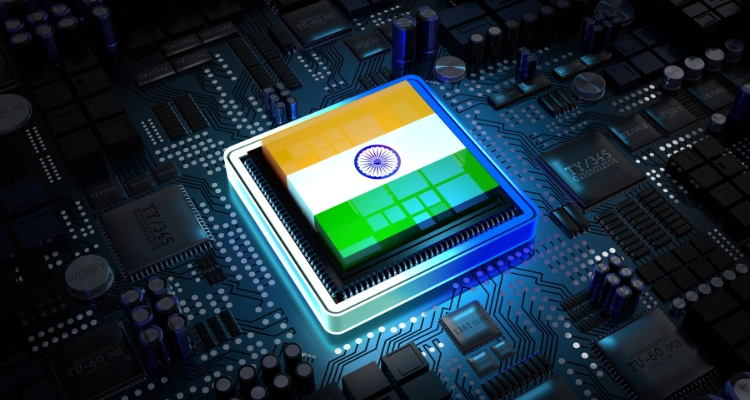
India’s chip ambitions have moved from policy announcements to on ground production.
The Union Budget 2026-27 announced India Semiconductor Mission 2.0 — marking a decisive new phase in the country’s electronics strategy.
The impact of this shift extends far beyond large semiconductor plants. Across the supply chain, smaller businesses are becoming an important part of the ecosystem.
Microcap companies, often overlooked in market discussions, are contributing in practical ways. From PCB fabrication and precision tooling to specialty chemical supply, these businesses support the manufacturing network that helps keep India’s semiconductor industry moving forward.
Key Takeaways
- Market Size: India’s semiconductor market is projected to reach ₹8.3–9.6 lakh crore by 2030, up from ~₹3.7–4.2 lakh crore in 2024-25.
- ISM 2.0 Focus: Semiconductor equipment, materials, domestic IP design, and supply chain resilience.
- Microcap Opportunity: Businesses in electronics manufacturing and ancillary services are well-placed in this expanding ecosystem.
- Policy Support: ₹76,000 crore in ISM incentives creates a long runway for supply chain development across India.
- Investor Note: Always evaluate businesses on fundamentals — not just sector-level policy tailwinds.
From ISM 1.0 to ISM 2.0 — A Policy Leap
India Semiconductor Mission 1.0 laid the groundwork. It established India’s first silicon fabs, chip packaging infrastructure, and design support programs.
As of December 2025, 10 projects totaling ₹1.60 lakh crore have been approved across 6 states.
ISM 2.0 goes further allocating ₹1,000 crore for this phase. The focus shifts to semiconductor equipment manufacturing, domestic design and supply chain resilience. Areas where Indian small companies have a growing role.
The Market Opportunity in Numbers
The growth in this sector is significant. Rising demand from electric vehicles, consumer electronics, defence systems, and 5G infrastructure is driving semiconductor consumption across the country.
India’s semiconductor market was ~₹3.7–4.2 lakh crore in 2024-25 and is expected to reach ₹8.3–9.1 lakh crore by 2030.
For a country that currently imports a large share of its semiconductor needs, this policy-driven push toward localization creates significant demand at every level of the supply chain – not just at the fabrication level.
Role of Microcap Companies in India’s Semiconductor Ecosystem
Large semiconductor fabrication plants often dominate the headlines. But the ecosystem that supports them is much wider and involves many specialized activities.
Areas such as equipment maintenance, specialty chemical supply, materials handling, PCB assembly, and precision engineering form essential parts of the semiconductor value chain, and this is where many microcap businesses operate and build their expertise.
India has also expanded its focus on chip design capabilities. Under the Design Linked Incentive (DLI) scheme, design infrastructure support has been extended to 278 academic institutions and 72 startups, helping strengthen the country’s semiconductor talent and innovation base.
As this ecosystem develops, a strong network of suppliers and engineering partners becomes essential. Microcap companies with capabilities in electronics manufacturing, industrial tooling, and specialized materials could find meaningful opportunities as India’s semiconductor supply chain continues to expand.
The Supply Chain Opportunity
A key ISM 2.0 focus is strengthening capabilities in semiconductor equipment and materials. This is particularly relevant for India’s MSME sector, which has capabilities in areas like mechanical engineering, specialty chemicals and industrial fabrication. Industries that align with semiconductor manufacturing needs.
New semiconductor projects across Gujarat, Odisha, Punjab, and Andhra Pradesh are also creating regional supplier ecosystems. For microcap businesses in these regions, this could translate into opportunities to work with large manufacturers looking for dependable local partners.
Companies worldwide are paying attention to supply chain resilience. India’s push for sourcing, supported by policy initiatives adds momentum to this opportunity.
What Investors Should Consider
This sector offers strong long-term potential, but it also requires careful evaluation. Semiconductor manufacturing is capital-intensive, technologically demanding, and often influenced by global demand cycles. As a result, not every microcap company connected to electronics will benefit equally from policy support.
For investors, the focus should remain on fundamentals. Factors like balance sheet strength order visibility, customer relationships and management team experience.
Conclusion
Indias semiconductor ambitions are no longer aspirational. They are institutional. ISM 2.0 sets a path toward domestic chip manufacturing, designing sovereignty and supply chain resilience.
For businesses in electronics manufacturing, precision engineering, specialty chemicals and related domains, this policy environment represents a structural tailwind. The key factor remains in business quality and operational execution. Not sector exposure.
At Steptrade Capital, the focus remains on identifying businesses with strong fundamentals and long-term growth potential within India’s evolving industrial landscape. Reach out to Steptrade Capital to understand how this sector fits within a broader investment framework.