








Introduction
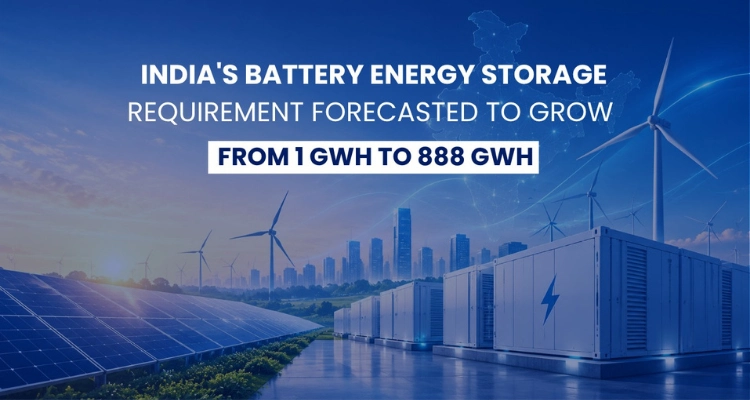
India’s Battery Energy Storage Requirement Forecasted to Grow from 1 GWh to 888 GWh. The Bigger Opportunity Lies Beyond the Batteries
When investors hear “battery storage,” they often think about lithium-ion cells but batteries represent only one component of a much larger value chain.
Every Battery Energy Storage System depends on several interconnected technologies.
These include:
- Battery cells
- Battery packs
- Battery Management Systems (BMS)
- Energy Management Systems (EMS)
- Power Conversion Systems (PCS)
- Thermal management
- Fire protection systems
Many of these businesses operate in industrial manufacturing, electrical equipment, automation, speciality chemicals, and software. Some are already well-established listed companies, while others remain relatively underappreciated.
Historically, some of the biggest wealth creators have emerged from businesses supplying critical infrastructure rather than producing the final product. The same pattern could play out in battery storage.
Energy Management Systems: The Intelligence Behind Every Battery
One part of this ecosystem deserves particular attention: Energy Management Systems (EMS).
If batteries store electricity, EMS determines how intelligently that electricity is used.
An Energy Management System constantly analyses electricity demand, renewable power generation, battery health, electricity prices, weather conditions, and grid requirements. Based on this data, it decides when batteries should charge, when they should discharge, how much energy should be stored, and how the overall system can maximise efficiency while extending battery life.
Without this intelligence, even the most advanced battery hardware cannot deliver its full potential. As battery deployments become larger and more sophisticated, software-driven energy management could become one of the highest-value segments across the entire storage ecosystem.
Policy Support Is Strengthening the Sector
The growth of battery storage is not being driven by market demand alone. Policy support is playing an equally important role.
Over the past few years, the Government of India has introduced several initiatives to accelerate energy storage adoption, including Viability Gap Funding (VGF) for Battery Energy Storage Systems, Production Linked Incentive (PLI) schemes for advanced manufacturing, Green Energy Corridor projects, Renewable Purchase Obligations (RPOs), and continued investments in transmission infrastructure.
Together, these initiatives are creating a strong foundation for long-term investment. Unlike many cyclical industries that depend primarily on short-term demand, battery storage benefits from both structural policy support and India’s steadily rising electricity consumption.
The Businesses That Could Benefit
The most attractive opportunities may not necessarily be companies manufacturing battery cells.
Instead, investors may want to monitor businesses involved in:
- Electrical equipment manufacturing
- Grid automation
- Industrial electronics
- Power transmission
- Speciality chemicals
- Energy management software
- Battery recycling
- Power engineering
- Industrial cables and switchgear
- Thermal management systems
Many of these businesses already possess established manufacturing capabilities, engineering expertise, and long-standing customer relationships. As demand for storage infrastructure grows, these advantages could translate into sustained growth opportunities.
What Should Investors Watch?
Structural themes create opportunities. Execution determines the winners.
When evaluating companies in this space, investors should look beyond headline announcements and capacity expansion plans. The more important questions are whether commercial production has started, whether customer qualifications have been secured, how efficiently production capacities are being utilised, and whether margins are supported by technology and operational capabilities rather than temporary supply shortages.
Ultimately, the businesses that consistently execute, allocate capital efficiently, and convert capacity into profitable growth are more likely to create long-term shareholder value.